Provider capability management
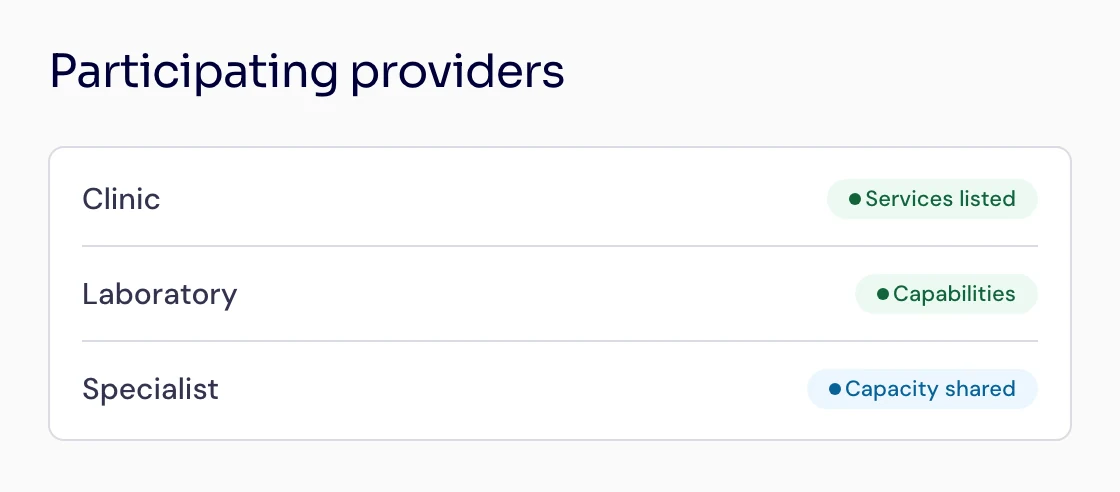
Maintain a structured understanding of participating providers, their locations, services, clinical capabilities, and operating requirements.
ByteNetwork is infrastructure for health plans, insurers, and healthcare networks to connect participating providers, coordinate referrals and services, and help patients receive care across different facilities.
Discuss ByteNetwork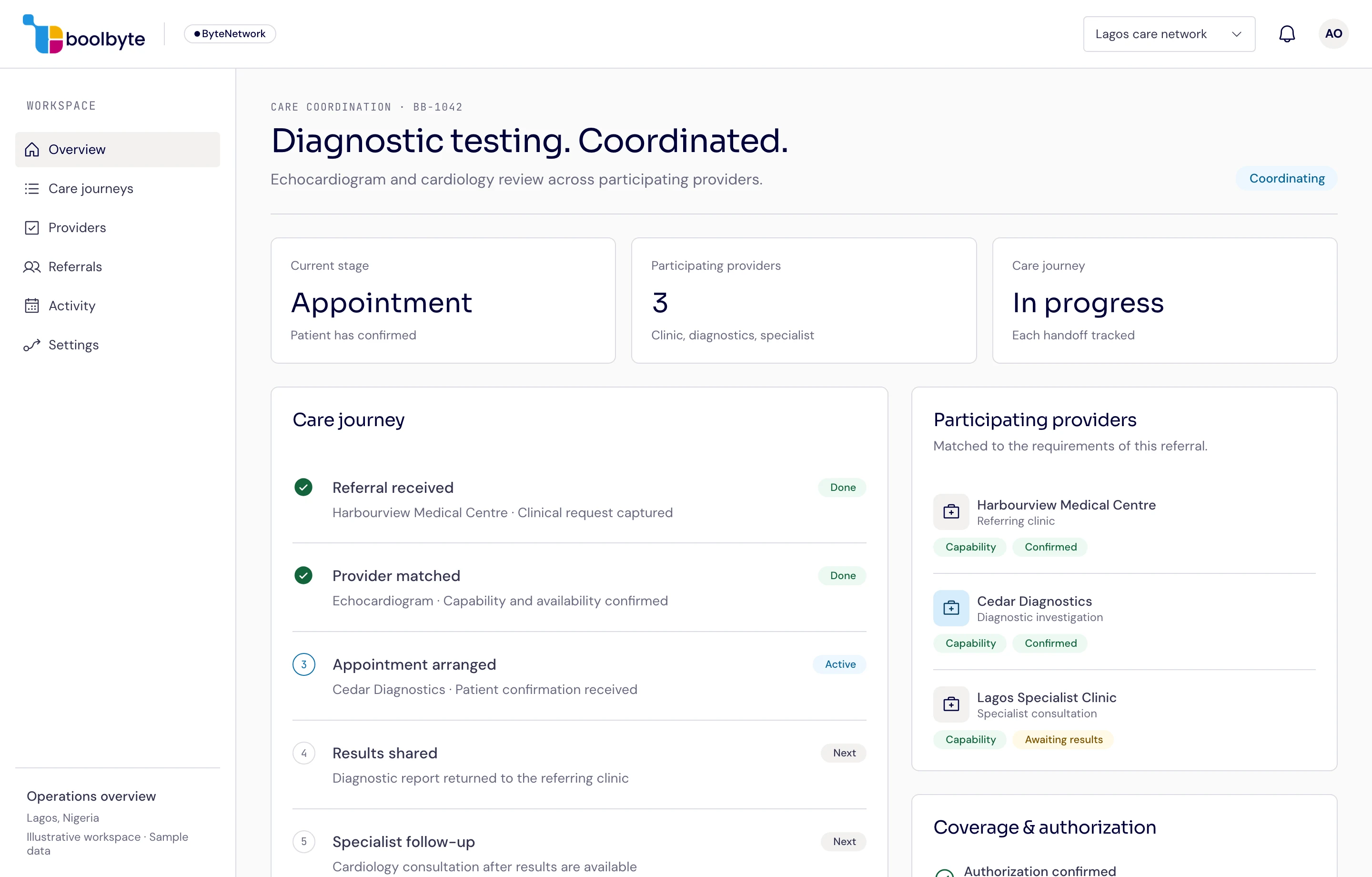
An insurer may have hundreds of contracted hospitals, clinics, laboratories, pharmacies, and specialists. But that doesn't mean those organizations can coordinate care effectively.
A directory may indicate that a provider offers a service. It may not tell you whether the service is available today, whether the provider can accept the patient, or whether the patient's health plan covers it.
Referral processes can be fragmented. Authorizations may require manual coordination. Patients may need to contact several facilities before receiving care.
The network exists, but the operational connections between providers are often missing.
ByteNetwork is designed to make those connections possible.
Maintain a structured understanding of participating providers, their locations, services, clinical capabilities, and operating requirements.
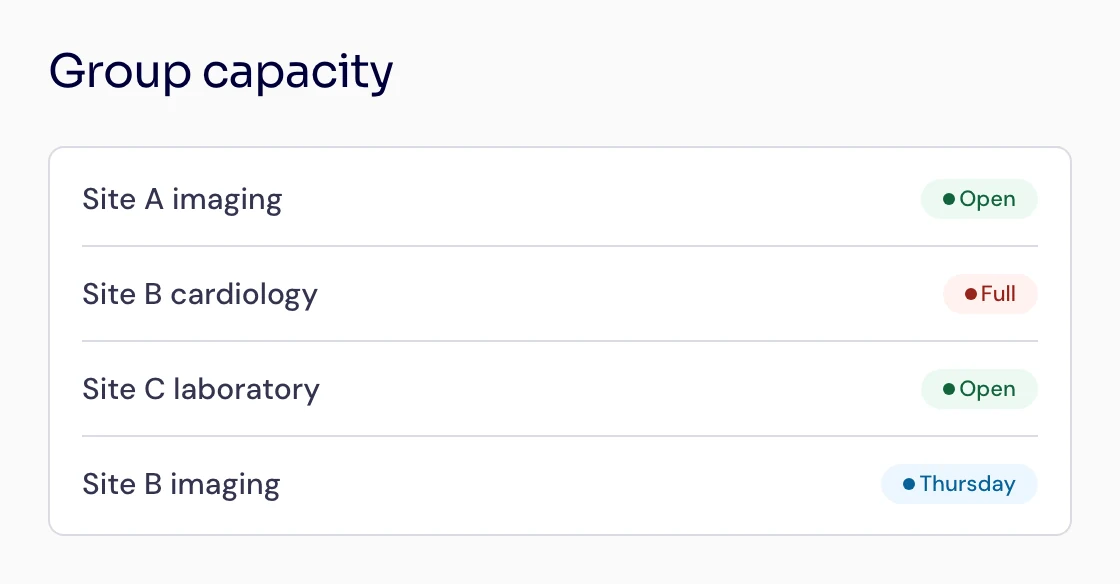
Use available information about appointments, resources, personnel, and service availability to understand which providers can fulfil a particular request.
Match patient care needs with appropriate providers based on the services required, location, capacity, and other relevant constraints.
Coordinate requests, appointments, supporting information, provider responses, and handoffs between participating organizations.
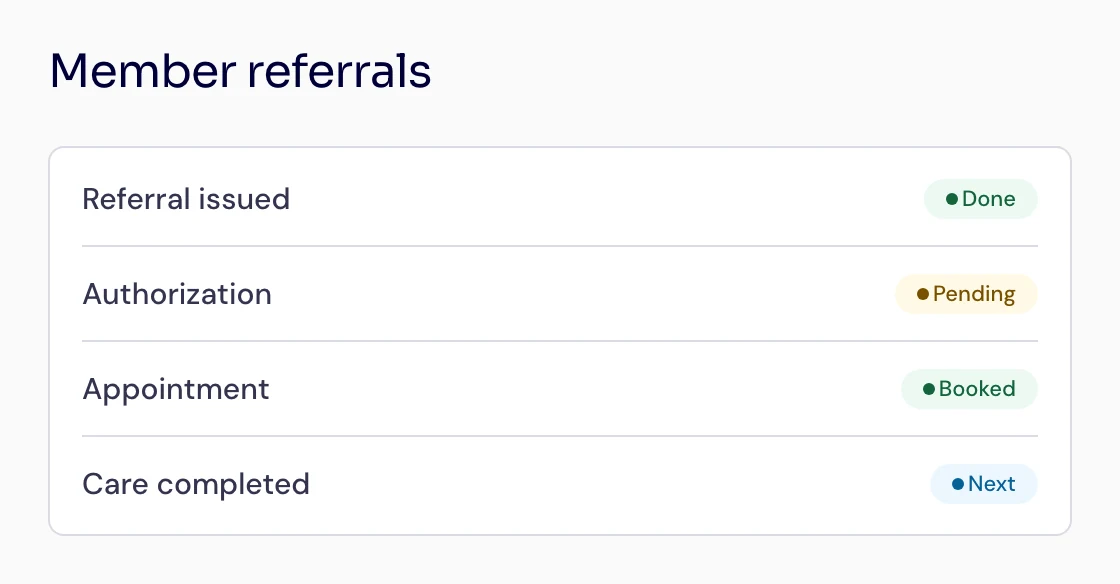
Account for coverage arrangements, provider eligibility, authorizations, and administrative prerequisites when coordinating care.
Maintain visibility into where a care request stands, identify incomplete handoffs, and support replanning when the intended pathway cannot proceed.
Model participating providers, services, capabilities, operational requirements, and the capacity they make available.
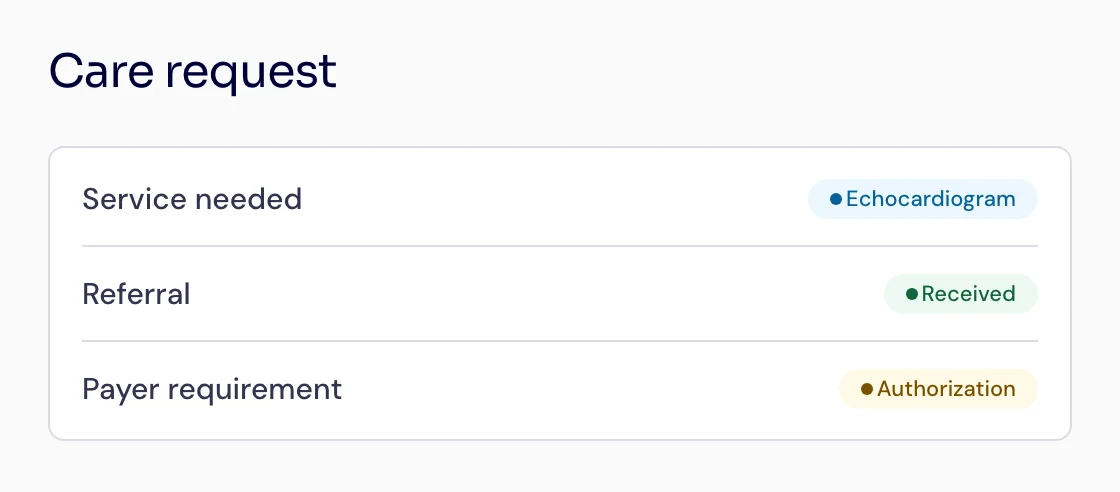
Identify the services, prerequisites, payer requirements, and other relevant constraints involved.
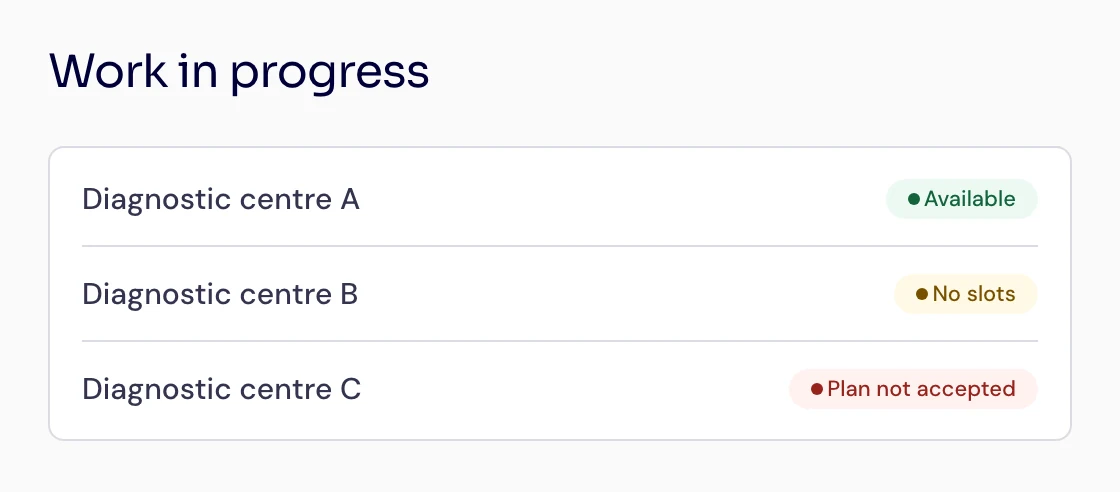
Identify participating facilities with appropriate capabilities and usable availability.
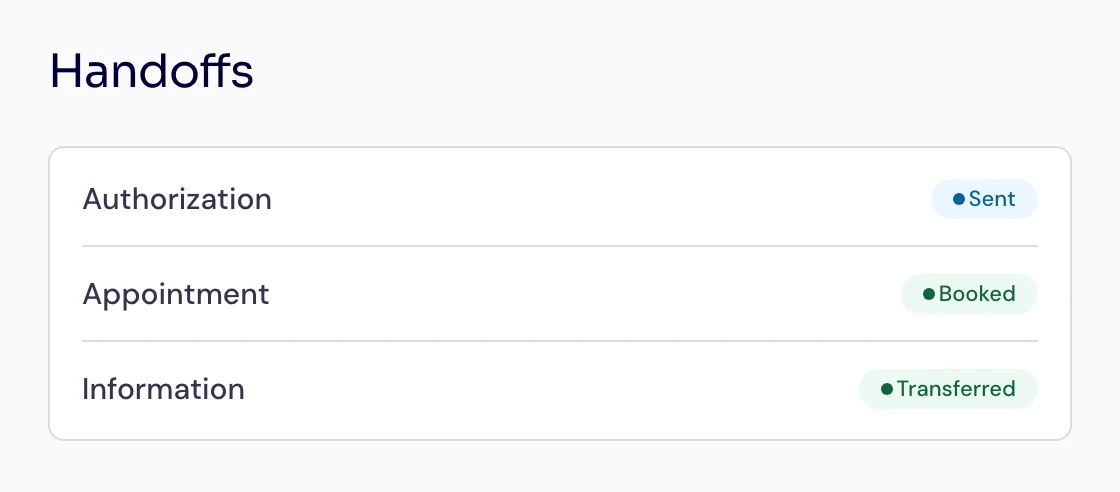
Support scheduling, provider communication, authorizations, and information exchange between organizations.
Track outstanding steps and coordinate the next action when a referral, appointment, or service is incomplete.
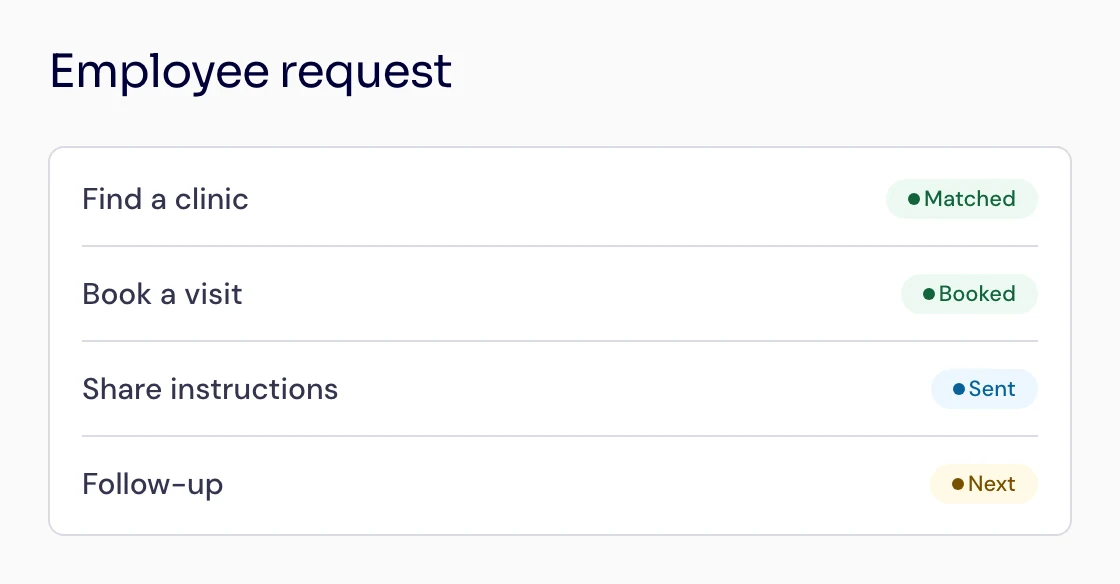
A clinic refers a patient for an echocardiogram and a specialist consultation. The clinic cannot do the investigation. Not every contracted centre can take the patient.
Based on service capability, relevant payer arrangements, and available capacity.
Support the required authorization, appointment, and information handoff.
Book a participating specialist when the investigation is complete.
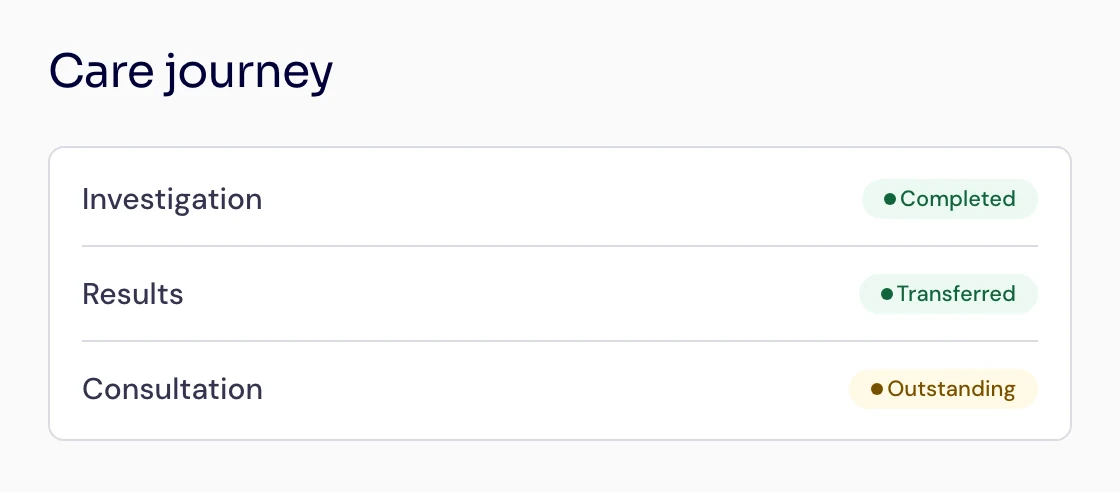
See whether the investigation was completed, results were transferred, and the consultation remains outstanding.
Adjust when appointments, resources, or provider availability change.
Participating providers remain responsible for delivering care. ByteNetwork coordinates the journey between them.
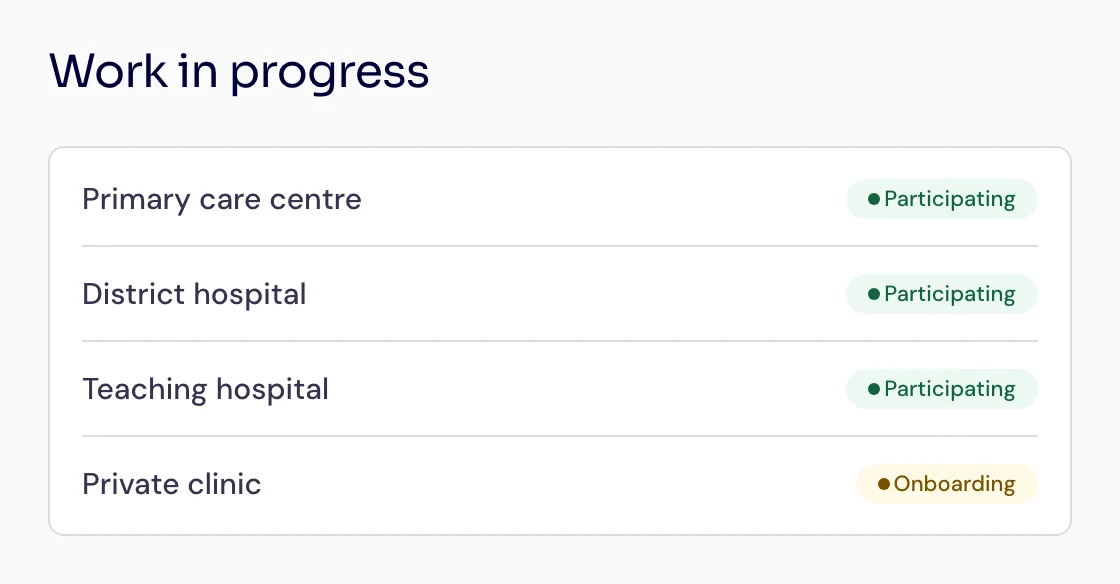
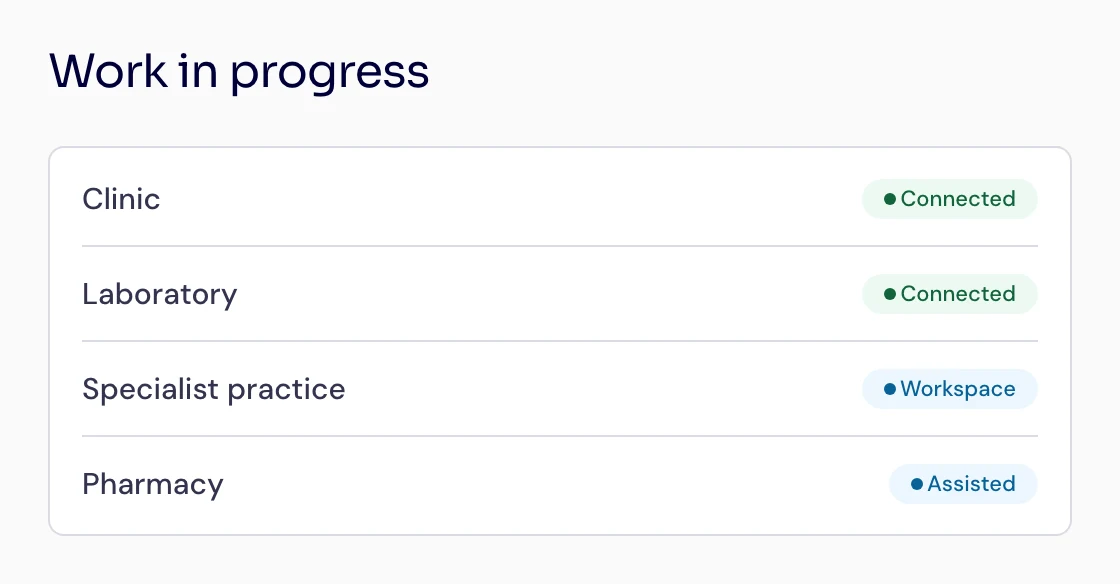
Providers can join with the systems they already run. A participating facility doesn't have to replace its systems or adopt ByteOps.
Expose selected services and operational information through a suitable integration.
Share available capacity and investigation services without replacing laboratory systems.
Join through a provider workspace when a deeper integration is not practical.
Participate through assisted workflows when systems cannot connect directly.
Facilities can also run their own operations with ByteOps healthcare operations software, and people can find and follow their care through ByteCare patient access and care navigation.
Improve coordination across contracted providers, help members navigate available services, and gain better visibility into referral and care completion.
Support healthcare coordination across participating facilities, service levels, and public-private provider arrangements.
Coordinate specialty services, diagnostics, and care transfers across multiple facilities within a larger healthcare organization.
Connect covered populations with participating providers and simplify coordination of healthcare services.
Create more structured coordination across independent healthcare organizations and participating service providers.
A large provider network isn't necessarily an effective provider network. ByteNetwork is designed to help organizations improve:
Care access
Connect healthcare needs to appropriate available services.
Provider utilization
Make better use of capabilities already distributed across participating organizations.
Referral completion
Reduce the number of requests that stall between providers.
Network visibility
Understand where services are available, constrained, or missing.
Operational efficiency
Reduce manual effort spent coordinating care across independent organizations.
It is the work of connecting participating providers, their clinical capabilities, and their available capacity so that referrals, appointments, authorizations, and handoffs can be coordinated across facilities and followed through to completed care.
A directory shows who belongs to a network and what services they offer. It may not show whether a service is available today, whether the provider can accept the patient, or whether the patient's health plan covers it. ByteNetwork adds capabilities, availability, payer requirements, and care-journey tracking.
ByteNetwork is designed to let insurers and health plans model their participating providers, match care requests to providers with the right capabilities and usable availability, support authorizations and handoffs, and see where referrals stall.
ByteNetwork is designed to work with providers operating different clinical systems, workflows, and levels of digital maturity. Providers can take part through suitable integrations, provider workspaces, or assisted workflows, without replacing their existing systems.
No. A participating facility doesn't have to replace its systems or adopt ByteOps to join a ByteNetwork deployment.
ByteNetwork keeps a structured record of provider capabilities and matches a care need to participating providers based on the services required, location, capacity, and other constraints such as payer arrangements.
Referral management tracks that a referral was sent and received. Care coordination covers the wider journey: finding a provider that can deliver the service, authorizations, appointments, information exchange, results handoffs, and the next step, through to completed care. ByteNetwork is designed for that wider journey.
We're interested in working with insurers, government programmes, hospital groups, and organizations exploring more coordinated models of healthcare delivery.
Discuss ByteNetwork